Taper Fade Haircut: Complete Guide to Styles, Types & Trends
Walk into any barbershop today and you’ll hear the same two words over and over: taper fade. It’s the haircut that never seems to go out of style. Maybe you’ve seen it on a friend, a coworker, or someone scrolling past on your phone, and you’ve wondered what makes it look so clean.
This guide breaks down everything about this iconic style. You’ll learn what it actually is, how it’s different from a regular fade, which version fits your hair type, and how to ask your barber for exactly the look you want. By the end, you’ll know enough to walk into any shop and get the cut you’re picturing in your head.
Let’s get into it.
What Is a Taper Fade Haircut?
1.1 What Is a Taper Fade?
A taper fade is a haircut where the hair gets shorter and shorter as it moves down toward the neck and ears. Up top, the hair stays longer and fuller. Near the hairline, it blends into very short hair or bare skin.
The word “taper” describes the gradual shrinking of length. The word “fade” describes how smoothly that change happens, with no harsh lines. Put them together, and you get a cut that looks sharp but never choppy.
Barbers usually use clippers with different guard sizes to create this effect. They start with a longer guard near the top and switch to shorter guards as they move down. Some barbers finish the bottom edge with a razor for an extra clean line.
A typical setup might go from a number 4 guard on top down to a number 1, then finish with no guard at all near the hairline. Every barber has their own rhythm, but the goal stays the same: no choppy lines, just smooth movement from one length to the next.
1.2 What Does a Taper Fade Look Like?
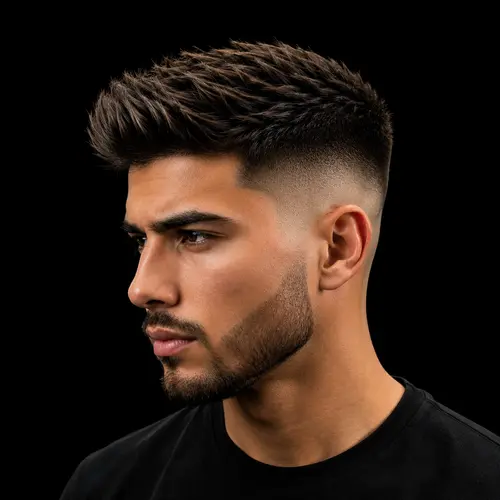
Picture the sides of someone’s head. Near the top, you’ll see normal hair length, maybe an inch or two. As your eyes move down past the ears, the hair gets noticeably shorter. By the time you reach the hairline, it’s either very short stubble or bare skin.
The back follows the same pattern. The neckline is shaped into a soft curve or a straight line, depending on what the person asked for. There’s no sudden jump in length anywhere. It just flows.
This blending effect is what makes the style look neat in photos and even better in person. The transition is smooth enough that you almost can’t pinpoint where one length ends and the next begins.
1.3 Is a Taper Fade a Thing?
Yes, and it has been for decades. This cut isn’t some new trend that popped up on social media last year. Barbers have been cutting versions of this style since at least the mid-1900s, and it’s been a barbershop staple ever since.
What changed is how many variations exist now. Back in the day, this cut was pretty simple. Today, you’ve got low, mid, and high versions, plus designs, textured tops, and pairings with beards. The core idea stayed the same, but the options grew.
1.4 Why This Style Is So Popular
People love this haircut because it works for almost everyone. Whether your hair is straight, curly, thick, or thin, a barber can adjust the cut to fit your head shape and hair texture.
It’s also low maintenance compared to some other styles. You don’t need a ton of product to keep it looking sharp. A quick trim every few weeks keeps things looking fresh.
There’s a professional side to it too. This haircut reads as neat and put-together, which makes it a safe choice for job interviews, weddings, or any setting where you want to look sharp without trying too hard.
Social media has also played a role in keeping the style popular. Barbers post before-and-after videos showing the blending process, and that visibility has introduced this look to a much wider audience than barbershop walk-ins alone.
Not all cuts look the same. The biggest difference between types comes down to where the fade starts on the head. Here’s a breakdown of the main versions.
2. Different Types of Taper Fade Haircuts
2.1 Low Taper Fade
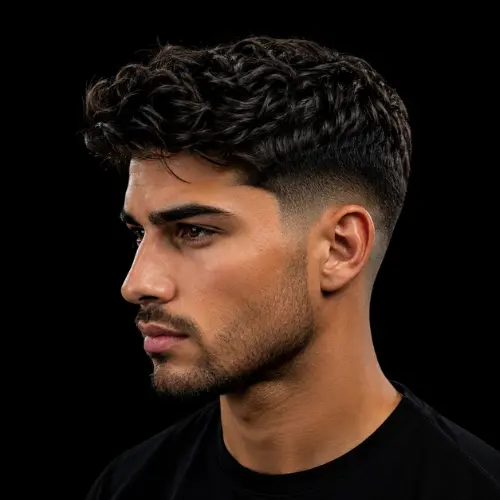
A low taper fade starts very close to the hairline, right around the ears and the bottom of the neck. Most of the head keeps its natural length, and only a small section near the bottom gets faded.
This version is subtle. From the front, you might not even notice the fade unless you’re looking closely. It’s a popular pick for guys who want a clean look without too much skin showing.
Office workers and anyone in a more conservative workplace often gravitate toward this option, since it stays close to a traditional cut while still adding a bit of modern shape.
Styling Tip: The low taper fade works best when combined with clean, structured hairstyles. A side-swept look, short quiff, or comb-over can enhance the haircut’s subtle shape. Apply a small amount of matte styling product to add control and texture without making the hair look stiff or overly styled.
2.2 Mid Taper Fade
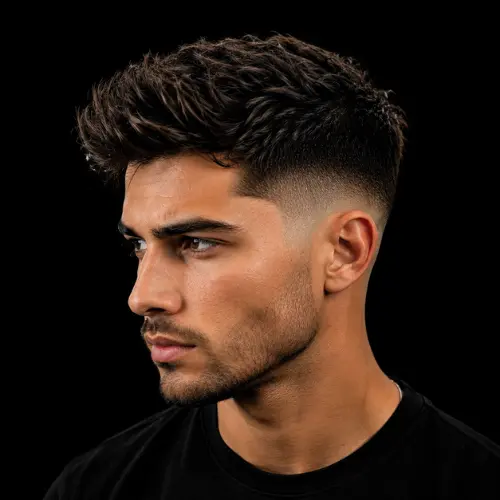
A mid taper fade starts higher, usually around the middle of the side of the head. This creates more contrast between the top and the sides than the low version does.
It’s a good middle-ground option. You get more shape and definition, but it’s still not as bold as a high fade. A lot of people pick this one because it balances style with versatility.
2.3 High Taper Fade
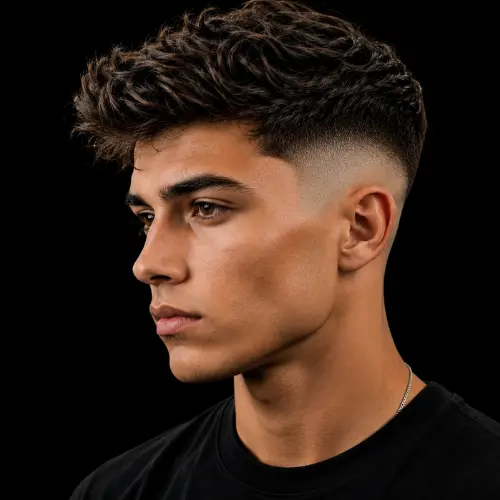
A high taper fade starts near the top of the head, sometimes just below where the longer hair begins. This creates the most dramatic contrast of the three main types.
Because so much of the side and back gets faded, this style draws more attention. It pairs well with longer or textured hair on top, since the short sides make the top length stand out even more.
This option also tends to need touch-ups more often, since new growth shows up faster against such short sides.
2.4 Mid to Low Taper Fade
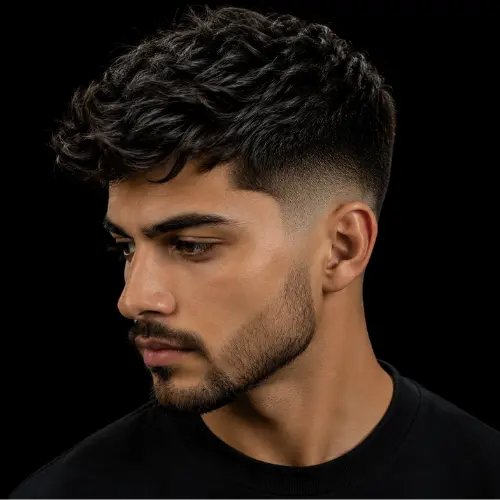
This version blends mid and low fade techniques. The cut starts at a mid height but tapers down more gradually, giving a softer transition than a standard mid version.
It’s a great choice if you like more shape than a low taper but don’t want the boldness of a true mid fade. Barbers can adjust the exact starting point based on your preference.
2.5 Medium Low Taper Fade
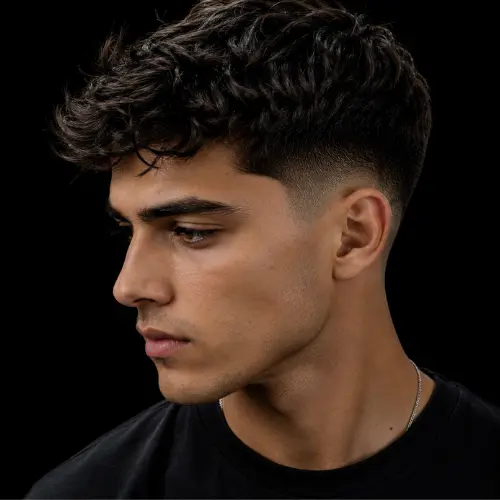
A medium low taper fade sits between a low and mid taper. The fade starts a bit higher than a classic low taper but not as high as a mid version.
This style works well for people who want a barely-there effect that still adds a touch of shape. It’s subtle enough for office settings but still looks intentional.
3. Taper Fade vs Other Popular Haircuts
It’s easy to mix up taper fades with other clipper cuts. Here’s how they actually compare.
3.1 Taper Fade vs Fade
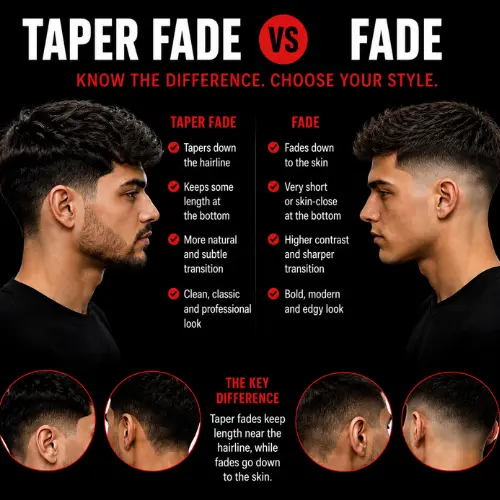
“Fade” is the general term for any haircut that gradually shortens hair down to the skin or near-skin length. A taper fade is one specific type of fade. Not every fade is a taper, but every taper fade falls under the broader fade category.
The main difference is how much skin shows. A standard fade often goes all the way down to bare skin near the hairline. The tapered version usually keeps a bit more length, even at its shortest point, unless it’s specifically cut as a skin taper.
Think of “fade” as the umbrella category and “taper fade” as one specific branch underneath it, alongside skin fades, drop fades, and burst fades.
Styling Tip:
If you’re not sure whether to ask for a fade or a taper fade, bring a reference photo to your barber. Pictures make it much easier to show how much contrast and skin exposure you want, helping you avoid ending up with a sharper fade when you were aiming for a more subtle tapered look.
3.2 Taper Fade vs Low Fade
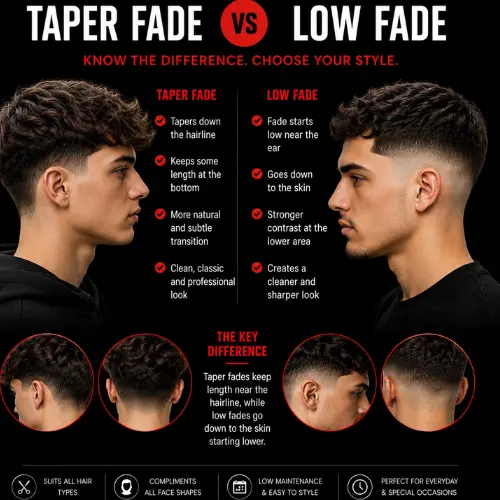
A low fade and a low taper fade sound almost identical, and they’re very close in practice. The small difference is that a low fade often goes closer to bare skin, while the tapered version tends to leave a touch more length at the bottom.
In real life, many barbers use these terms interchangeably. If you want to be specific, just tell your barber how much skin you want showing, and they’ll know exactly what to do.
3.3 Taper Fade vs Skin Fade
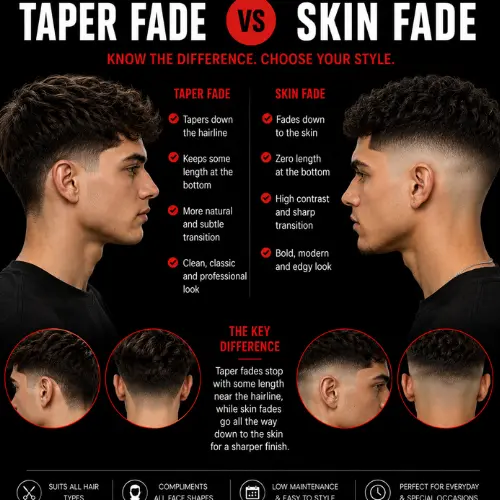
A skin fade goes all the way down to bare skin at some point on the head. A taper fade, on the other hand, usually keeps some hair at the shortest point rather than going completely bare.
If you want maximum contrast and a bold, modern look, a skin fade delivers that. If you prefer something a little softer and easier to grow out, the tapered version is the better pick.
3.4 Taper Fade vs Drop Fade
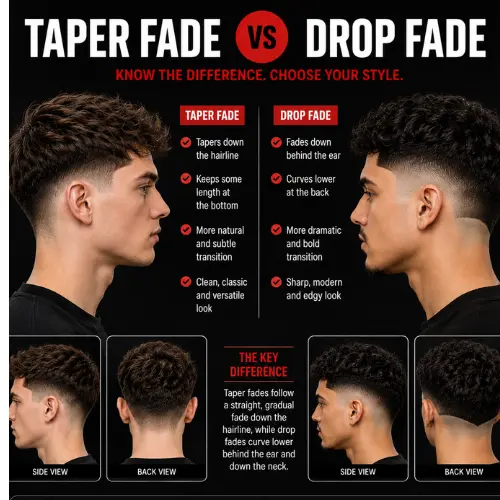
A drop fade follows a curved line that drops down behind the ear, instead of fading in a straight horizontal pattern. A taper fade typically follows a more even, level line around the head.
Drop fades tend to look more stylized and work especially well with curly or coily hair on top. Taper fades are more classic and fit almost any hair type without much fuss.
3.5 Low Taper Fade vs Low Skin Fade
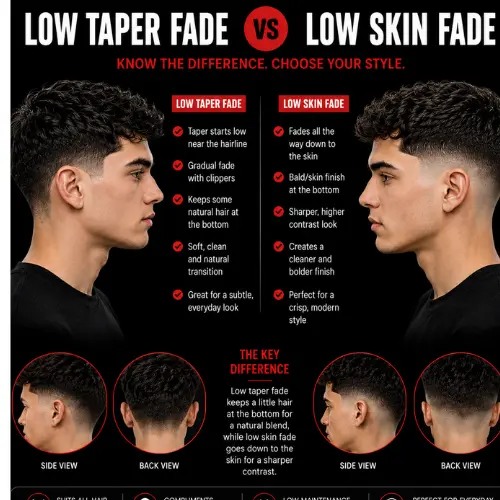
Both of these start low on the head, near the hairline. The difference comes down to how short the shortest point actually gets. A low taper fade leaves a small amount of hair at the bottom. A low skin fade goes all the way to skin.
If you’re not sure which one you want, ask your barber to start with the taper version. It’s easier to go shorter later than to wait for hair to grow back.
3.6 Low Taper Fade vs Taper Fade
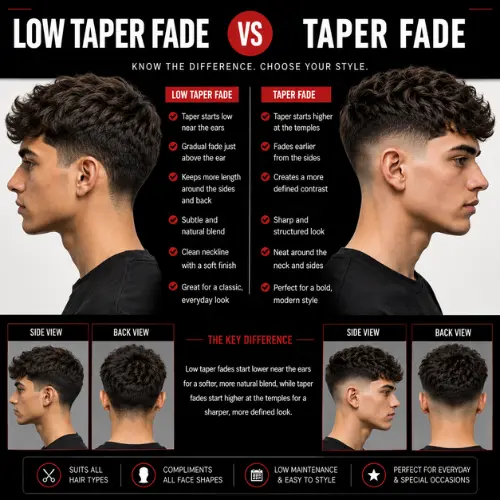
This comparison is really about specificity. “Taper fade” is the broad category. “Low taper fade” tells your barber exactly where you want the cut to begin. Saying just “taper fade” without specifying the height leaves more room for your barber’s judgment, which can be good or bad depending on how much you trust their eye.
4. Popular Taper Fade Haircut Styles
The taper fade works as a base for tons of different looks on top. Here are some of the most popular combinations.
4.1 Fluffy Taper Fade
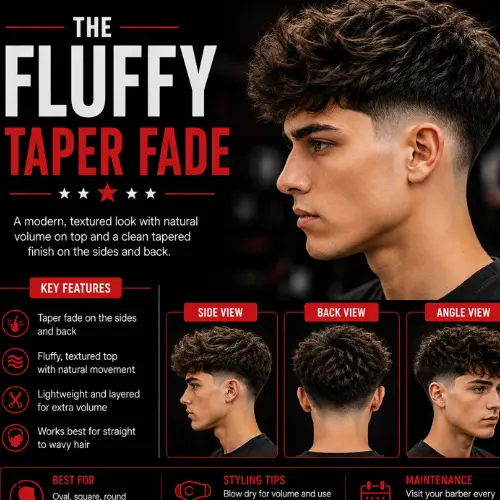
This style pairs a tapered side with extra volume and texture on top. The hair on top is left longer and styled to look full and a little tousled, almost like it has a mind of its own.
It works great for guys with naturally wavy or thick hair, since that texture helps create the fluffy look without much product.
A light sea salt spray or texturizing powder can boost this style even further on flatter hair types that need a little help holding shape.
Styling Tip: To keep the fluffy top looking natural and full, blow-dry your hair upward while using your fingers to create lift at the roots. Finish with a light texturizing powder or sea salt spray for added volume and movement without weighing the hair down. Avoid heavy gels or pomades, as they can flatten the texture and reduce the airy effect that makes this style stand out.
4.2 Textured Taper Fade
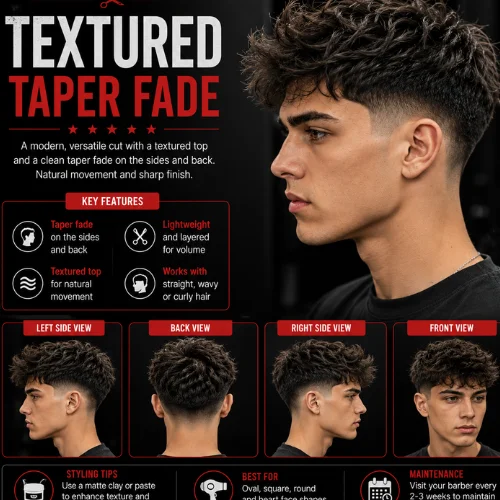
A textured taper fade uses choppy, layered cutting techniques on top to create movement and depth. Instead of one uniform length, you get varied lengths that catch the light differently.
Barbers often use texturizing shears or a razor to thin out sections and add that broken-up look.
4.3 Messy Taper Fade
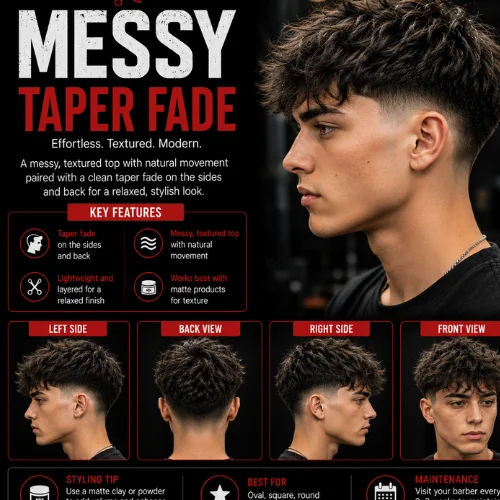
This one’s all about that just-rolled-out-of-bed appearance, minus the actual bedhead. The top is left longer and styled with light product to look effortlessly undone.
It’s a low-effort, high-reward style. A little pomade or texture paste worked through damp hair is usually all it takes.
4.4 Buzz Cut Taper Fade
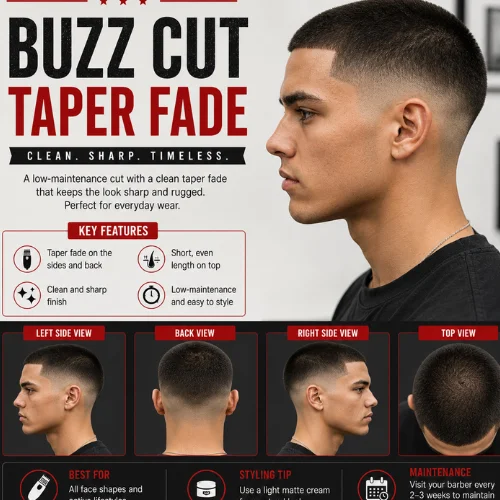
Here, the top is cut very short, almost like a buzz cut, and it blends into an even shorter fade on the sides. This is one of the lowest-maintenance combinations out there.
It’s a favorite for guys who want a clean, no-fuss look or who are dealing with thinning hair up top.
Styling Tip: Keep the buzz cut looking sharp with a trim every 2–3 weeks to maintain a clean fade. If your hair is thinning, use a light matte texture powder to create a fuller, more natural appearance.
4.5 Taper Fade with Long Hair on Top
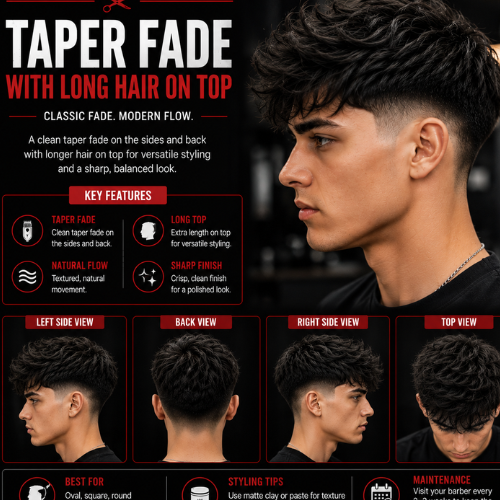
This pairing creates strong contrast. The sides fade short while the top stays several inches long, giving you options to style it slicked back, pushed to the side, or left natural.
It takes a bit more daily styling time, but the payoff is a bold, versatile look.
4.6 Taper Fade with Medium Length Hair
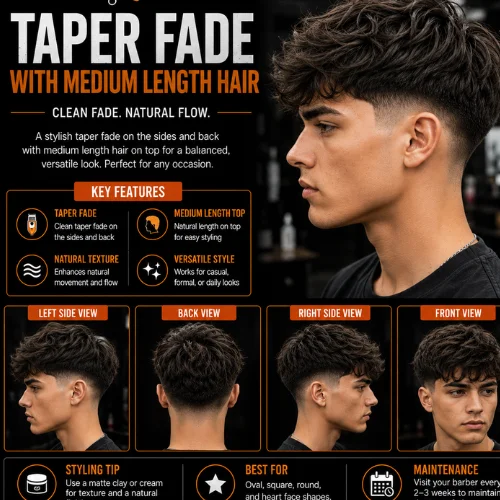
This is the in-between option. The top isn’t buzzed short, but it’s not dramatically long either. It usually falls somewhere around two to four inches.
It’s flexible enough to style differently from day to day without much commitment.
4.7 Taper Fade for Thick Hair
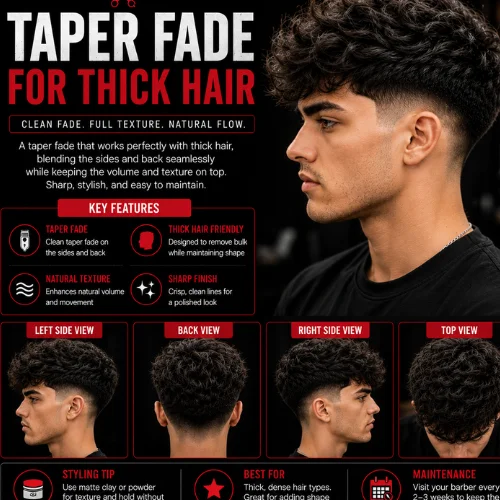
Thick hair holds shape well, which makes it great for these cuts with volume on top. A skilled barber will thin out some of the bulk so the hair doesn’t look too heavy or hard to manage.
This combination often looks fuller without needing extra product to fake the volume.
4.8 Taper Fade Undercut
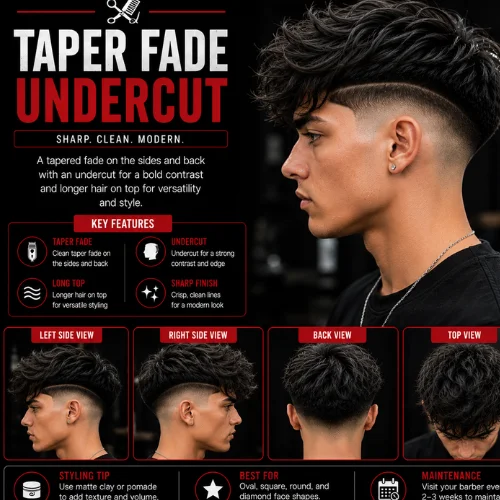
A taper fade undercut combines the clean, gradual blend of a taper fade with the bold contrast of an undercut. The sides and back are faded neatly, while the hair on top remains significantly longer, creating a sharp and modern appearance. This style is popular among men who want a versatile haircut that looks stylish, professional, and easy to customize with different hair lengths and textures.
4.9 Taper Fade for Boys
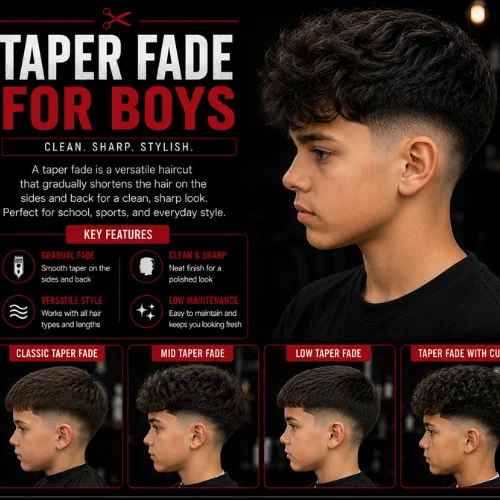
Kids’ cuts usually keep things simple, with shorter overall length and a milder fade compared to adult styles. Low and mid tapers are common choices since they’re easier to maintain between haircuts.
Parents often prefer this style because it grows out neatly and doesn’t look messy as it gets longer.
4.10 Taper Fade with Beard
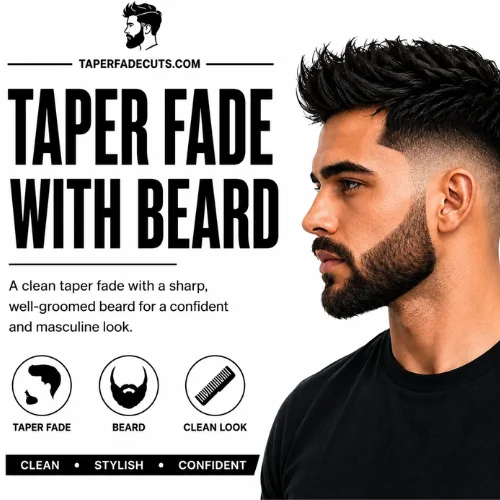
Pairing this cut with a well-groomed beard creates a balanced, polished look. The faded sides keep things tidy while the beard adds shape to the jawline.
Many barbers will line up the beard and the fade in the same session so everything blends together cleanly.
This pairing also makes the jawline look more defined, which is part of why it’s such a common request for guys looking to sharpen up their overall appearance for photos or events.
4.11 Taper Fade Line Up
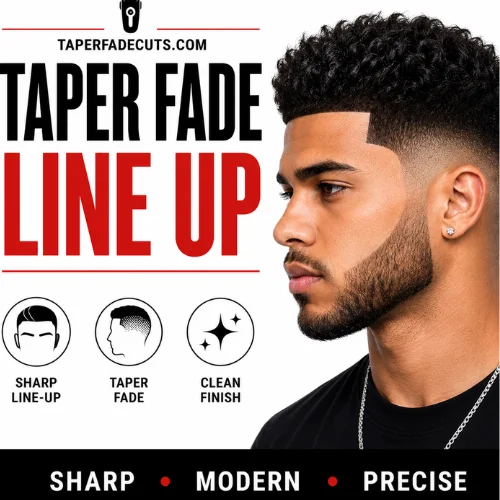
A line up adds a sharp, defined edge along the hairline, usually at the front and sides. It’s often done with a straight razor or edger after the fade is complete.
This extra step gives the whole haircut a crisp, just-left-the-barbershop finish that can last several days.
5. Taper Fade Haircut Designs
Some people take their cut a step further by adding a design carved into the short hair.
5.1 Low Taper Designs
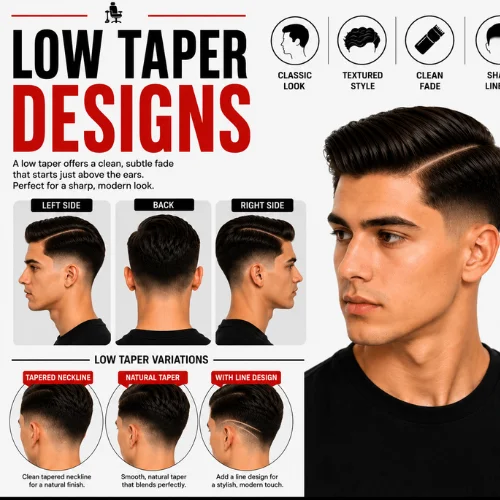
Because a low taper doesn’t go all the way to skin in most cases, designs here tend to be simple. Thin lines or small geometric shapes near the hairline are common, since there’s less bare skin to work with.
Styling Tip:
Keep hair designs subtle on a low taper fade. Since the fade area is smaller, clean lines and simple patterns tend to look sharper and last longer than complex designs, which can quickly lose definition as the hair grows out.
5.2 Hair Designs
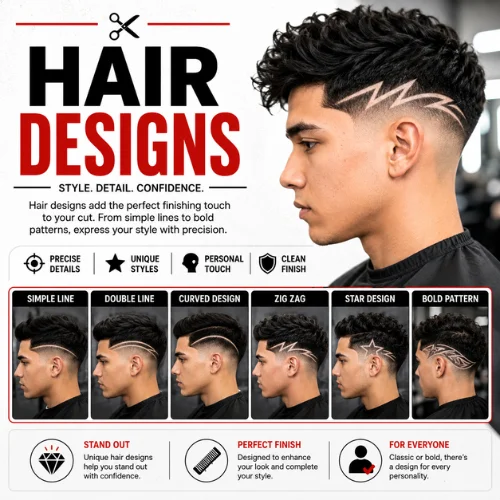
Designs can range from simple straight lines to more detailed patterns like stars, waves, or even small portraits. Barbers use trimmers and clipper attachments to carve these shapes into the short or faded sections.
5.3 Best Design Ideas
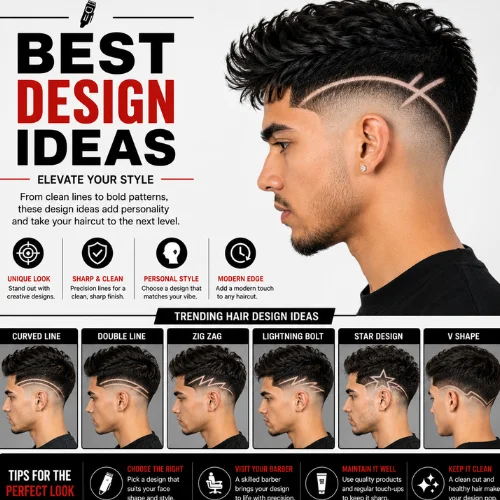
Some of the most requested designs include side part lines, zigzag patterns, and sport team logos. Simpler designs tend to last longer between touch-ups, since fine details grow out and blur faster.
Many shops now display a portfolio of past design work, either in the shop itself or on social media, so you can scroll through real examples before deciding on something for your own head.
5.4 Adding a Design to Your Taper Fade
Adding a design works best with a mid or high taper fade, since there’s more space on the sides to showcase the pattern. If you’re not sure what to pick, ask your barber to show you a few options based on your hair length and head shape.
6. Taper Fade Haircuts by Hair Type
Hair type changes how a taper fade looks and how it should be cut.
6.1 For Straight Hair
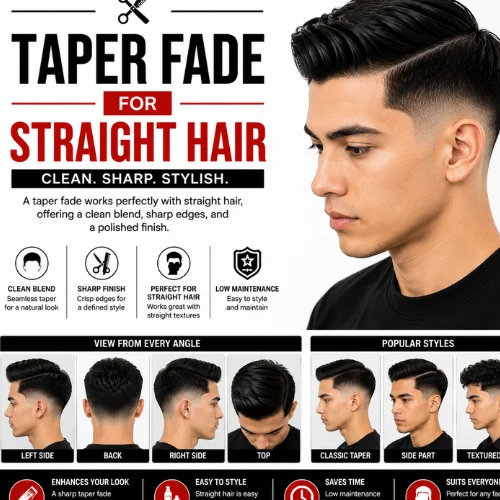
Straight hair lays flat naturally, which makes the cut look extra clean and structured. The line between the longer top and the faded sides tends to show up sharply, giving a crisp finish.
6.2 For Thick Hair
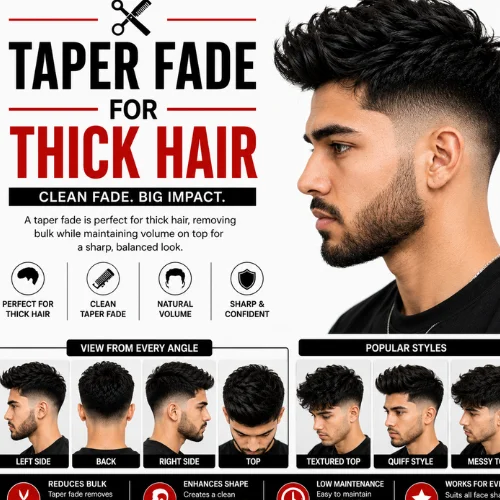
Thick hair needs some thinning to avoid looking bulky on top. Barbers often use thinning shears to remove weight while keeping the overall shape intact.
6.3 For Medium Hair
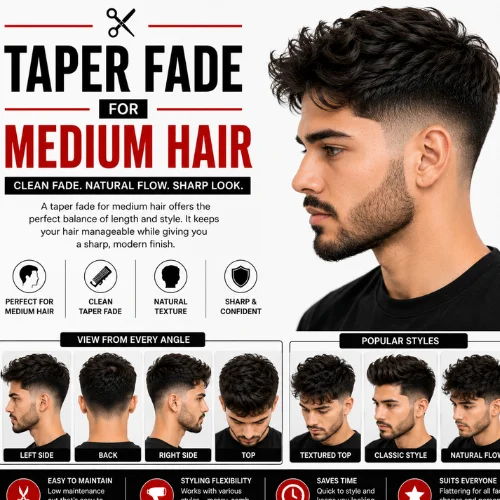
Medium length hair gives you the most flexibility. It’s long enough to style in different ways but short enough to stay manageable day to day. This length works well with almost any taper height.
You can comb it back for a formal look one day and let it sit naturally messy the next, all without needing a fresh haircut in between.
6.4 For Long Hair
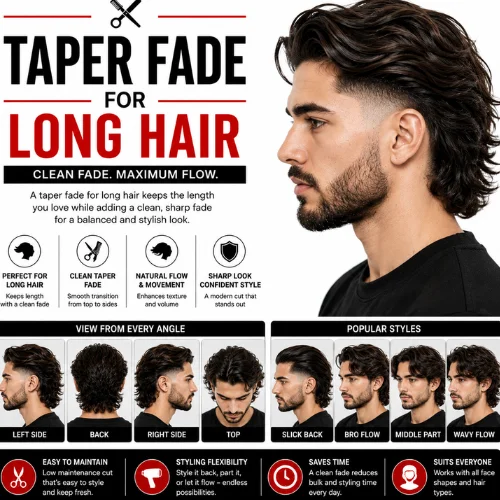
When the top is kept long, the faded sides do most of the visual work, creating contrast that makes the longer hair look intentional rather than unkempt. This combination needs more regular trims to keep the fade sharp as hair grows.
6.5 Taper Fade for Black Men
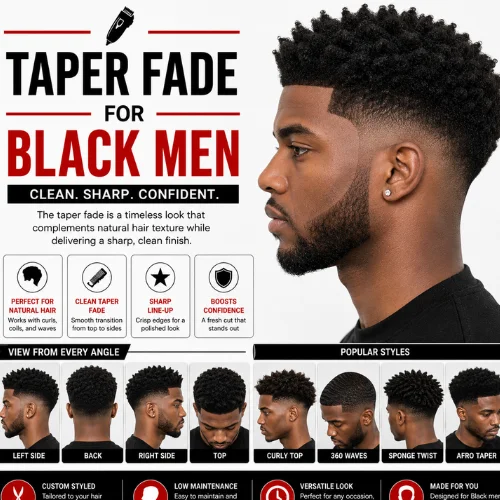
For coily and curly hair textures, drop fades and high tapers tend to highlight natural curl patterns nicely. Many barbers also recommend keeping some length on top to let the natural texture show, rather than cutting it too short.
7. Taper Fade from Every Angle
A good cut should look clean from any direction, not just from the front.
7.1 Back View
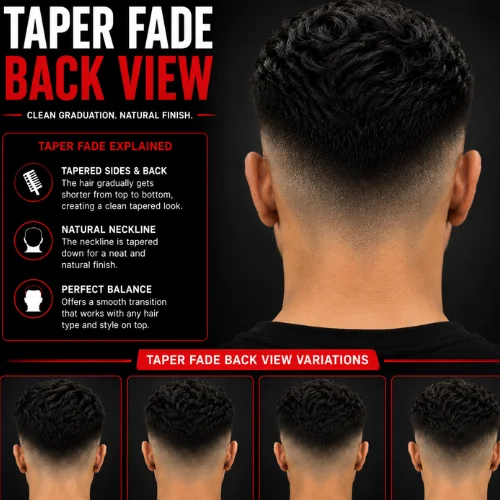
From the back, you should see a smooth, even blend with no patchy spots or harsh lines. The neckline is usually shaped into a soft curve, though some people prefer a straighter line.
7.2 Side View
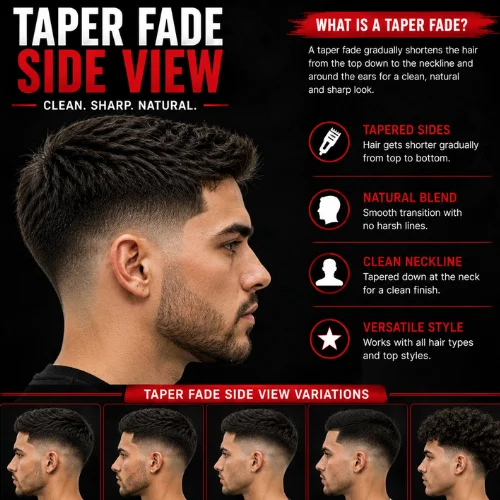
The side view shows off the taper most clearly. This is where you can really see the gradual shift from longer hair at the top down to short hair near the ear.
7.3 On the Sides
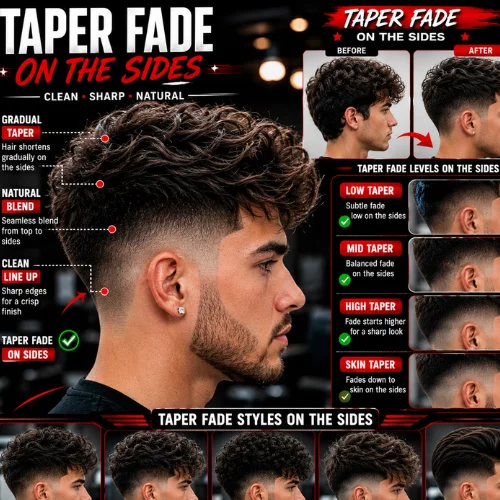
The sides are where most of the technique happens. Barbers blend multiple clipper guard lengths here to avoid any visible lines between sections.
7.4 On the Back
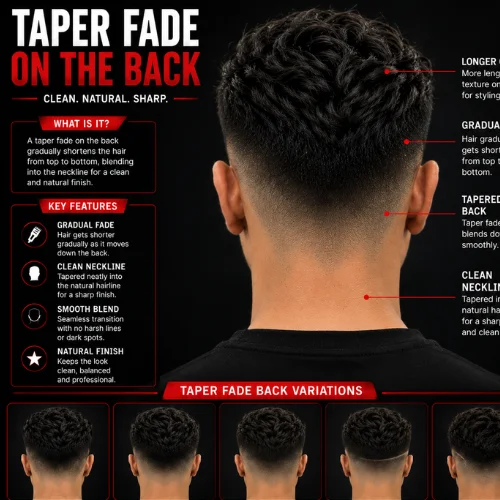
The back of the head usually mirrors the sides, fading down toward the neckline at a similar height and angle, so the whole cut looks balanced when viewed from any angle.
7.5 Side and Back Together
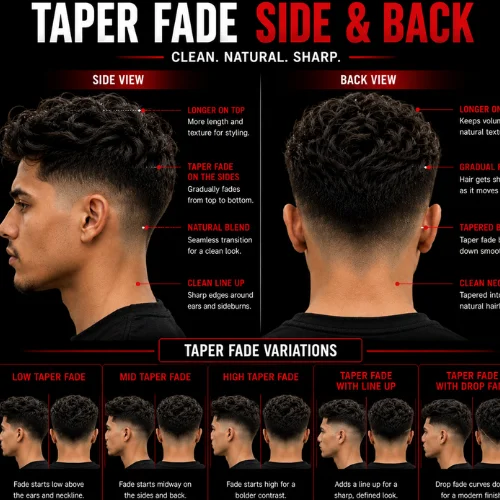
When the side and back fades match up evenly, the entire haircut looks like one continuous, flowing shape rather than separate sections stitched together. This is the mark of a well-executed taper fade.
8. How to Ask Your Barber for a Taper Fade
Knowing the right words to use makes a huge difference in getting the cut you actually want.
Tell your barber three things: how short you want the top, where you want the fade to start (low, mid, or high), and how short you want the bottom of the fade to get. The more specific you are, the better the result.
Bring a reference photo to your appointment, even if it’s just close to what you want. Photos help avoid miscommunication about height, length, and overall style far better than words alone.
It also helps to mention your face shape and lifestyle, like how much time you spend styling your hair each morning, so your barber can suggest a fade height that fits your routine.
9. Taper Fade Tutorial
9.1 How to Cut a Taper Fade Step by Step
Getting a clean taper fade at home is possible with the right tools and a bit of patience. Here’s a step-by-step breakdown of how barbers approach this cut, so you know what to expect in the chair or can try it yourself.
What you’ll need: A set of clippers with multiple guard sizes, a trimmer for detail work, a hand mirror, and a comb.
Step 1 — Section the Hair Start by identifying where you want the fade to begin — low (near the ear), mid (halfway up the side), or high (close to the top). This decision sets the entire look, so take a moment to decide before picking up the clippers.
Comb through the hair first to remove any tangles and get a clear picture of the natural growth pattern.
Step 2 — Establish the Top Length Use your longest guard (typically a number 3 or 4) to trim the hair on top down to your desired length. Work from front to back using smooth, even passes. Don’t go too short here — the top is what you’ll style every day.
Step 3 — Start the Fade from the Bottom Begin with no guard or a number 0.5 near the very bottom of the hairline. Move the clippers in short, upward flicks rather than straight passes. This flicking motion is what creates the blend.
Work your way around the head — sides first, then the back.
Step 4 — Build Up the Guards Switch to a number 1 guard and go slightly higher on the head than where you used the 0.5. Blend it into the lower section using that same upward flick technique. Then repeat with a number 2, going a bit higher again.
The goal is to have each guard size overlapping slightly with the one before it so there are no visible lines.
Step 5 — Blend the Transition Zone This is the most important step. Use a number 1.5 or 2 guard to blend the gap between the very short bottom and the longer hair above. Go over the transition zone multiple times with light passes until no harsh line remains.
A good blend should look like the hair is naturally getting shorter — not like it was cut at different lengths.
Step 6 — Clean Up the Neckline and Edges Use a trimmer (no guard) to shape the neckline. Most people choose a rounded neckline, but a straight line also works depending on your preference. Clean up around the ears and the front hairline as well.
If you’re adding a line up, use the trimmer to define a sharp edge along the front and sides of the hairline.
Step 7 — Check from Every Angle Use a hand mirror to check the back and sides. Look for any uneven patches, missed spots, or harsh lines. Touch up as needed with light passes.
9.2 At-Home Tips
If you’re new to cutting your own hair, start with a low taper fade — it’s the most forgiving since the faded section is small. Practice the blending technique on lower guard sizes before moving up, and always err on the side of leaving more length. You can always go shorter, but you can’t put the hair back.
10. Maintenance and Upkeep
A sharp taper fade doesn’t stay sharp on its own. A little routine care between barbershop visits keeps the cut looking fresh instead of fuzzy.
10.1 How Often to Get a Taper Fade Trim
Most people need a touch-up every two to three weeks. The faded section grows out faster than the rest of the head, so the contrast that made the cut look clean starts to soften within just a few days of regrowth.
If your hair grows fast, you might need a trim closer to the two-week mark. Slower-growing hair can sometimes stretch to three or four weeks before it really needs attention.
Styling Tip:
To keep your taper fade looking sharp between barber visits, clean up the neckline and sideburns with a trimmer at home. This simple maintenance step can help extend the fresh-cut appearance and make it easier to go a little longer between touch-ups.
10.2 Daily Care and Styling Tips
Wash your hair two to three times a week with a gentle shampoo. Washing too often can dry out your scalp, while washing too little lets oil and product build up and weigh the hair down.
A soft brush or comb each morning helps train the top hair to sit in one direction, which makes the whole cut look more put-together even on a day you don’t style it much.
10.3 Best Products for a Taper Fade
A light pomade or matte clay works well for most styles, since both add hold without making the hair look greasy. For curlier or thicker textures, a leave-in cream can help control frizz without flattening the volume on top.
Keep product use light around the faded sides. Too much product there can make short hair look clumpy instead of smooth.
10.4 Common Mistakes to Avoid
Waiting too long between trims is the biggest mistake. Once the fade grows out past a certain point, the smooth blend disappears and it just looks like regular hair growing unevenly.
Skipping the barber and trying to clean up the neckline yourself with a razor can also backfire, since it’s easy to create uneven lines without practice. It’s usually better to leave touch-ups to a professional or stick to small, careful trims if you’re doing it at home.
11. Best Taper Fade Haircuts Now a Days
Taper fades keep evolving each year, with small tweaks keeping the style feeling fresh.
11.1 Most Popular Trends
Right now, textured tops paired with low to mid tapers are leading the pack. People want enough fade to look sharp but not so much that it feels overdone.
11.2 Best Low Taper Fade Styles
Low tapers paired with natural texture on top remain a steady favorite. This combination looks polished for work while still feeling relaxed enough for everyday life.
11.3 Best Mid Taper Fade Styles
Mid tapers with a slight design or simple line up are gaining popularity, especially among younger guys who want a bit more personality in their haircut.
11.4 Best High Taper Fade Styles
High tapers paired with longer, styled tops continue to stand out as a bold, attention-grabbing choice for anyone who wants maximum contrast.
12. Frequently Asked Questions
12.1 What Is a Taper Fade Haircut?
A taper fade haircut gradually shortens hair from the top of the head down toward the hairline and neck, creating a smooth transition with no harsh lines.
12.2 What Does a Taper Fade Look Like?
It looks like a gradual blend, with fuller hair on top slowly shrinking down to short hair or skin near the ears and neckline, without any obvious lines between lengths.
12.3 Is a Taper Fade Better Than a Fade?
Neither is objectively better. A taper fade tends to look softer and grows out more gracefully, while a standard fade often offers bolder contrast. The right pick depends on your personal style and how often you can get touch-ups.
12.4 Which Taper Fade Is Best?
It depends on your face shape, hair type, and how much contrast you want. Low tapers suit subtle, professional looks, while high tapers suit bolder, more eye-catching styles.
If you’re still unsure, starting with a mid taper is a safe middle ground that you can always adjust higher or lower at your next appointment.
12.5 How Long Does a Taper Fade Last?
A taper fade typically looks sharp for two to three weeks before it starts needing a touch-up, though this can vary based on how fast your hair grows.
13. Conclusion
13.1 Key Takeaways
A taper fade is a versatile, classic haircut that gradually shortens hair from top to bottom. It comes in low, mid, and high versions, pairs well with countless top styles, and works across nearly every hair type and texture.
13.2 Choosing the Right Style for Your Face Shape and Hair Type
If you have a rounder face, a higher taper can add length visually. If your face is longer, a low taper often balances things out better. Thick or curly hair usually benefits from some thinning, while straight hair tends to show off the cut’s clean lines naturally.
13.3 Final Thoughts
The taper fade has stuck around for so long because it adapts to just about anyone. Whether you want something subtle for the office or something bold enough to turn heads, there’s a version of this haircut built for you. Bring this guide to your next barber appointment, point to what you like, and walk out with a cut that actually matches what you pictured.
At the end of the day, a great taper fade comes down to communication with your barber and a little patience while you figure out which version suits you best. Once you find your fit, it’s the kind of haircut you’ll keep coming back to year after year.
Want to know more about us? Visit our About Us page to learn about our mission and expertise. If you have any questions, feel free to contact us through our Contact Us page. For details on how we collect and protect your data, please read our Privacy Policy. you can also review our Disclaimer for important information about using the website.