Taper Fade with Long Hair: Complete Guide to Styles, Cuts & Tutorial

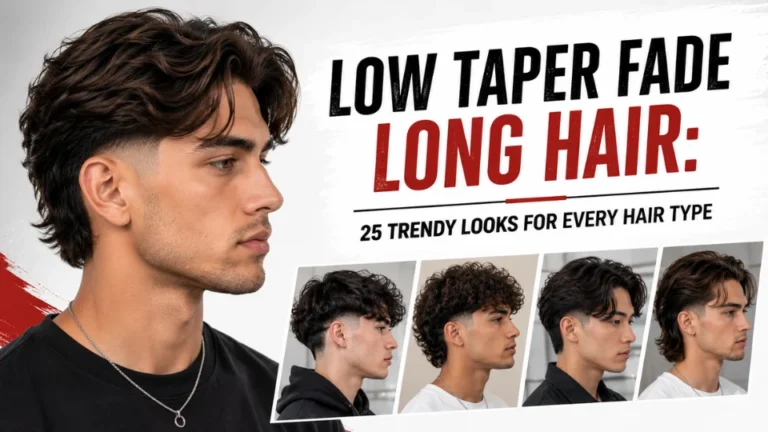
A taper fade with long hair is one of the sharpest and most versatile hairstyles a man can choose today. The combination of long hair on top with clean, faded sides creates a modern, balanced look that enhances texture and style. Whether you’re heading to a job interview, the office, or a weekend hangout, a taper fade with long hair offers the perfect mix of professionalism and effortless confidence.
But here’s what most people don’t know: getting a taper fade with long hair right requires a specific approach. The fade height, the way the top is cut, and how you maintain it all matter more than they do with shorter styles.
This guide covers everything. You’ll learn which taper fade style works best for your hair type, how to talk to your barber so you get exactly the look you want, and a full step-by-step tutorial for how the cut is actually done. You’ll also find the most popular trending styles that are blowing up right now in barbershops and on social media.
Let’s get into it.
What Is a Taper Fade with Long Hair?
How the Taper Fade and Long Hair Work Together
A taper fade with long hair is exactly what it sounds like. The sides and back are cut short using a gradual fade technique, while the hair on top is kept long, usually three inches or more.
The taper part means the length shortens step by step as it moves down the head. The fade part means that change is smooth and blended, with no harsh lines. The long hair on top stays full and free to style however you like.
The visual result is a strong contrast. Short, tight sides next to long, flowing hair on top creates a shape that looks intentional and polished from every angle.
Why This Style Is So Popular Right Now
Guys who want to keep their length aren’t always willing to lose the clean, structured look that shorter cuts offer. A taper fade on long hair gives you both at the same time.
The sides keep the whole look from appearing too relaxed or ungroomed, while the length on top gives you styling options that shorter cuts simply can’t.
It also photographs very well. The contrast between faded sides and long flowing hair on top makes for a sharp, editorial look that reads well on screen, which is part of why it stays popular across social media platforms.
Best Types of Taper Fade for Long Hair
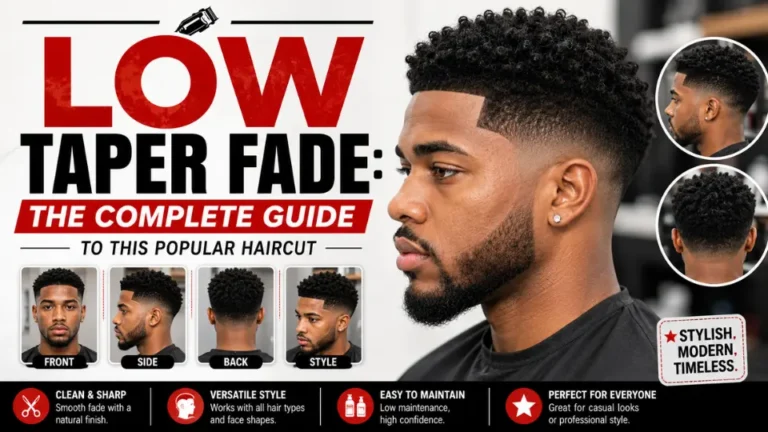
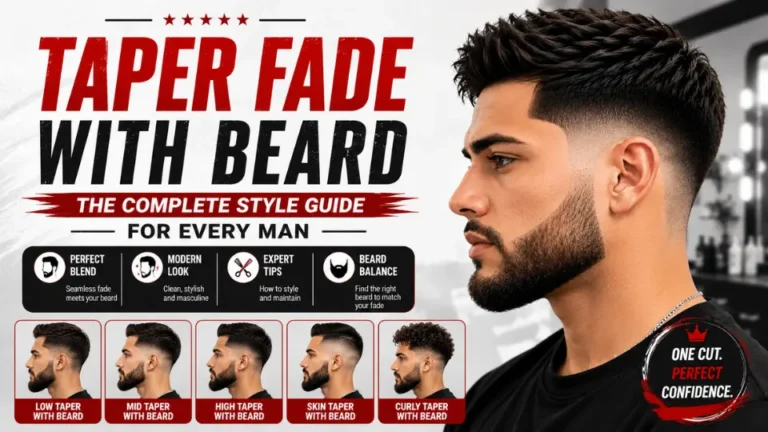
Low Taper Fade with Long Hair

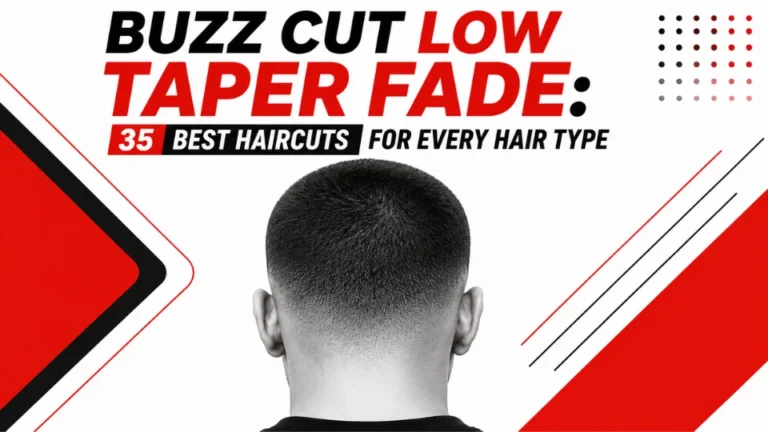
A low taper fade starts just above the ears and along the neckline. Only a small strip at the very bottom gets faded, so the sides stay relatively full.
For long hair on top, this is the most conservative and subtle option. The long top does most of the visual work, while the low taper simply adds a hint of structure at the bottom.
It’s a great starting point if you’ve never had this style on long hair before. It’s easy to grow out and rarely looks awkward during that process.
Styling Tip: Keep the taper fresh with regular trims, use a sea salt spray for natural texture, and finish with a light matte clay for flexible hold and all-day volume.
Mid Taper Fade with Long Hair

A mid fade starts around the temple area, roughly halfway up the sides. It creates noticeably more contrast than a low taper while still keeping some length on the sides.
This is the most popular version for men with long hair on top. A mid taper fade creates a balance between structure and flow, giving the long top plenty of room to do its thing while the sides look intentionally shaped.
High Taper Fade with Long Hair

A high taper fade starts close to the top of the head, leaving only the very upper section of hair at full length. This is the most dramatic version.
The contrast here is sharp and striking. Long hair spilling over from tightly faded sides creates a bold, eye-catching look that works particularly well for guys with very long, thick, or textured hair on top.
Skin Fade with Long Hair on Top

A skin fade takes the faded area all the way down to bare skin. Combined with long hair on top, this creates the maximum possible contrast and the most polished, modern result.
This version needs more frequent touch-ups since any regrowth on the faded section becomes immediately visible against skin. But for those who keep up with it, the result is always striking.
Drop Fade with Long Hair

A drop fade follows a curved line that arcs down behind the ear rather than going in a straight horizontal line. It’s a softer fade shape that flows more naturally with the curve of the head.
With long hair on top, the drop fade’s curved line adds a subtle, stylized quality to the sides without looking harsh or rigid.
Best Taper Fade with Long Hair Styles
Slick Back Taper Fade with Long Hair

The long hair on top is combed or styled backward, away from the forehead. It creates a sleek, sophisticated look that goes from the boardroom to a dinner out without changing a thing.
This style works best with straight or slightly wavy hair. A medium-hold pomade or styling cream keeps the slick-back in place throughout the day.
Styling Tip: Use a medium-hold pomade or styling cream to comb the hair back for a smooth, polished finish. Blow-dry the hair backward for added volume, and keep the longer top well-conditioned to maintain a sleek, healthy look all day.
Flow Haircut with Taper Fade

The flow haircut is all about natural movement. The hair on top is left to fall freely where it wants, usually pushed to the sides or back. It has a relaxed, athletic vibe, often compared to the hairstyle of hockey players.
This pairing gives the flow cut structure at the sides while letting the length on top move and breathe naturally. It’s one of the fastest-growing trending styles for men with longer hair.
Man Bun Taper Fade

The long hair on top is pulled back and tied into a bun at the crown of the head. The faded sides give the whole style a clean, finished look that a plain man bun without any fade simply doesn’t have.
This pairing has been trending for years and hasn’t lost steam. It’s incredibly practical for guys who grow their hair long for comfort but still want a polished daily look.
Taper Fade with Long Curly Hair

Long curly hair paired with faded sides creates one of the most visually rich and texturally interesting looks available. The curls on top spring up and out naturally, creating volume and shape without much effort.
The fade on the sides prevents the curly top from looking too wide or overgrown. This combination is especially popular for men with type 3a to 3c curl patterns.
Styling Tip: Keep long curls hydrated with a leave-in conditioner or curl cream to maintain definition and reduce frizz. Refresh your fade every 2–3 weeks so the contrast stays sharp while the curls remain the focal point.
Taper Fade with Long Wavy Hair

Wavy hair sits between straight and curly. When left long and paired with clean faded sides, it creates a relaxed but polished look.
Salt spray or a light texturizing product is usually all it takes to bring out the wave pattern and add definition without making the hair look done-up.
Wolf Cut Taper Fade

The wolf cut is one of the biggest hair trends of the last two years, and it’s not slowing down. It combines a shaggy, layered top with shorter sides and a slight tail at the back.
Adding faded sides to the wolf cut gives it a more structured edge. The shaggy layers on top look intentional rather than grown-out when the sides are clean and tight.
Mullet Taper Fade with Long Hair

The modern mullet is very different from the 1980s version. Today’s interpretation keeps the top and sides relatively neat, with longer hair flowing down the back. Faded sides make the whole look more refined.
This style has seen a massive resurgence and works best for guys who want something with personality and edge.
Taper Fade with Curtain Bangs

Curtain bangs are parted in the middle and fall to either side of the face. They’ve been trending strongly for men with longer hair. Paired with clean, faded sides, the center part draws attention to the face while keeping everything around it tidy.
This look suits oval, round, and heart-shaped faces especially well.
Pompadour Taper Fade with Long Hair

The long hair on top is swept upward and forward, creating height and volume at the front. A high fade on the sides gives the whole style a classic, barbershop-clean finish that contrasts with the dramatic top.
This is a more styled, intentional look that takes a bit more product and time to achieve each morning, but the result is always impressive.
Taper Fade Long Hair with Beard

Pairing a taper fade with beard with a full or medium beard creates a connected, masculine look where the beard flows naturally from the haircut. The fade blends the junction between beard and hairline seamlessly.
A barber can shape the beard and the fade in the same session so the two elements look like parts of one intentional style rather than separate decisions.
Styling Tip: Keep your beard neatly trimmed and ask your barber to blend it seamlessly into the fade for a clean, connected look. Use beard oil daily to keep facial hair soft and well-groomed while maintaining the haircut with regular touch-ups every 3–4 weeks.
Taper Fade on Long Hair by Hair Type
Taper Fade on Long Straight Hair

Straight hair gives you the cleanest, most defined look with this cut. The sides blend smoothly and the long top can be combed or styled very precisely.
The downside is that straight long hair can fall flat and look limp without product. A volumizing spray or light mousse on the roots helps keep it looking full.
Taper Fade on Long Wavy Hair

Wavy hair is one of the most versatile textures for this combination. It holds styles well, has natural volume, and looks good even without much product.
For the fade, wavy hair blends easily because the texture is consistent. For the top, just enhancing the natural wave pattern is usually enough to create a great result.
Taper Fade on Long Curly Hair

Long curly hair needs a barber who understands how curls behave. Shrinkage matters here, since the top will appear shorter after washing and drying than it does when stretched.
A high or mid fade works best with long curly hair because the tight sides let the curls sit at full volume on top without looking overwhelming.
Taper Fade on Long Thick Hair

Thick hair gives volume and shape naturally, which means this style on long thick hair always looks full and healthy. However, thickness can make the sides harder to blend without thinning shears or texturizing techniques.
A good barber will remove some bulk from the sides before fading so the transition from long to short looks smooth rather than blunt.
Taper Fade on Long Fine Hair

Fine hair is lighter and thinner, which means it can look flat when left long. Going with faded sides helps by removing the bulk so the top looks comparatively fuller.
Avoid cutting fine long hair too short on top, because the less hair there is, the harder it becomes to build any volume at all.
Taper Fade for Long Hair Tutorial: Step-by-Step
Tools You Need
Before you start, gather everything you’ll need.
Clippers with guards 1 through 4 for the faded sections. A T-outliner for edges and the neckline. Barber shears for trimming the long hair on top. A wide-tooth comb and a fine-tooth comb. A handheld mirror to check the back. A cape or towel to catch clippings. Clipper oil to keep the blades smooth. A spray bottle with water.
Good lighting matters. Work near a window or under a strong overhead light so you can see every angle clearly.
Step 1 — Decide the Fade Height and Guide Line
Before picking up any clipper, decide where the fade will start. Low, mid, or high? This is the most important decision of the whole cut.
For long hair on top, a mid taper fade is the most common choice because it creates strong contrast without eating too far into the sides. Draw an imaginary guide line at your chosen height around the head. Everything below this line is the fade zone.
Step 2 — Set the Length on Top First
Always trim the long hair on top before working on the fade. This lets you see the final shape of the top before you commit to the sides.
Dampen the top slightly and comb it flat. Working section by section from front to back, trim any split ends or uneven lengths. If the goal is to shape or add layers, this is the step to do it.
Don’t remove too much length. For a taper fade with long hair, the contrast is the whole point.
Step 3 — Clip the Sides with the Longest Guard
Start with guard 4 on the sides, working just below your guide line with upward strokes. Work all the way around the head, both sides and the back, staying below the guide.
This first pass sets the overall length of the upper fade zone.
Step 4 — Work Down Through Guard Sizes
Switch to guard 3 and work from the bottom up to about two-thirds of the way up the fade zone. Then switch to guard 2 and work from the bottom to about halfway. Then switch to guard 1 and work the lower quarter of the fade zone.
You now have four distinct sections on the sides, each slightly shorter than the one above it.
Step 5 — Blend the Transition Zones
Blending is the heart of this whole technique. Use a guard 3.5 or 3 to blend between the guard 4 and guard 3 zones. Then use a guard 1.5 between the guard 1 and guard 2 zones.
Move the clipper in small, upward flicking motions at each transition zone. The flick is key: push the clipper upward and then rotate your wrist outward as you reach the upper edge of each zone. This feathers the length rather than cutting a straight line.
Keep checking from both sides to make sure both sides of the head match.
Step 6 — Fade Down to the Hairline
For the very bottom of the fade zone, remove the guard entirely and use the bare blade close to the hairline, holding the clipper nearly flat against the skin.
Use very light pressure. Blend this bare section up into the guard 1 section above it using the same flicking motion.
If you prefer not to go all the way to skin, a guard 0.5 is a softer alternative.
Step 7 — Shape the Neckline
Use the T-outliner to define the neckline at the back. Follow the natural hairline for a rounded neckline, or cut a straight horizontal line for a squared neckline.
With this style on long hair, the neckline matters more than in shorter cuts because the long hair falling down can draw the eye straight to the bottom edge.
Step 8 — Clean Up Edges and Line Up
Use the T-outliner to clean up the edges around the ears, at the temples, and along the front hairline. A sharp line up along the front adds a crisp, defined border between the faded sides and the long hair on top.
Go slowly. The edges and line up are the finishing details that separate an okay cut from a great one.
Step 9 — Style the Long Hair on Top
Once the fade is complete, style the long hair on top into its final look. Whether that’s slicked back, parted to the side, pulled into a bun, or left loose and natural depends on the style you’re going for.
Apply product to damp hair for most styles. A medium-hold pomade works for slick-back styles. A light cream or air-dry product suits natural or wavy textures. A strong-hold gel or paste works for more structured styles like the pompadour.
How to Ask Your Barber for a Taper Fade on Long Hair
Key Words to Use
Walk in with three clear pieces of information. First, where you want the fade to start: low, mid, or high. Second, how long you want to keep the top and whether you want any layers or shape added. Third, how short you want the very bottom of the fade to be: stubble-length or down to bare skin.
These three things remove most of the guesswork for your barber.
What to Show Your Barber
Bring a reference photo every single time, especially for a taper fade with long hair, since this style has so many variations. A photo eliminates ambiguity around fade height, top length, and overall feel.
Find a photo where the model has a similar hair type and texture to yours. A style that looks great on straight hair may behave very differently on thick or curly long hair.
How to Maintain a Taper Fade with Long Hair
Trim Schedule
The faded sides need a touch-up every two to three weeks. The long hair on top can usually go four to six weeks between trims, since gradual growth looks natural at longer lengths.
Daily Care for the Long Top
Long hair on top requires regular washing, conditioning, and some form of daily product or styling. Without moisture and detangling, long hair develops tangles, frizz, and split ends quickly.
Brush or comb the long hair gently each morning. Start from the ends and work your way up to the roots to avoid pulling or breakage.
Best Products for Long Hair with a Taper Fade
A lightweight leave-in conditioner or hair oil adds moisture and tames frizz without making the hair look greasy. For styling, choose products based on the look you’re going for: light pomade for natural movement, strong-hold clay for textured or messy styles, and a flexible gel for slicked-back looks.
Taper Fade with Long Hair: Face Shape Guide
Oval Face

Oval faces are the most versatile. Almost every version of this haircut with long hair looks great here. You can wear the long top pushed to the side, slicked back, or left natural.
Round Face

For rounder faces, styles that add height on top work best. A mid or high fade with long hair styled upward, like a pompadour or a slick-back with volume, creates length that balances the width of the face.
Avoid styles that spread the hair wide at the sides, as that can emphasize roundness rather than reduce it.
Square Face

Square faces have a strong jawline that pairs naturally with bolder fade heights. A high fade with long hair pulled back or to the side works very well here. Softer styles like the flow cut or curtain bangs can also balance the strong jaw.
Oblong or Long Face

For longer faces, styles that add width rather than height work best. A low or mid fade with long hair worn loose or parted to the side adds visual width across the temples and crown without adding more vertical height.
Trending Taper Fade Long Hair Styles Right Now
Taper Fade with Flow (Surfer Look)

The flow haircut has exploded in popularity over the last two years, especially among college-age guys and athletes. The long hair is grown out and left to flow naturally past the ears and sometimes the collar.
Paired with a taper fade on long hair, the flow look goes from surfer-casual to polished and intentional. This is one of the most searched men’s haircut combinations heading into 2026.
Disconnected Undercut with Long Hair

The disconnected undercut keeps a strong, visible line between the long top and the shaved or faded sides. There’s no blending at the transition, which is the opposite of a standard blended fade.
It’s been trending for several years and remains a bold, expressive choice for guys who want their haircut to make a statement.
Edgar Cut Long Version with Taper Fade

The Edgar cut traditionally features a blunt horizontal fringe across the forehead. The long version keeps more length overall while keeping that sharp, straight-across fringe.
Combined with faded sides, this creates a dramatic, editorial look that’s especially popular in Latino communities and on social media platforms like TikTok and Instagram.
Korean Two-Block with Long Top

The two-block cut keeps the top long and separate from short, disconnected sides. The Korean-inspired style has gone global, and the long-top version is gaining significant traction.
The sides don’t blend into the top. Instead, the contrast is stark and intentional, giving the look an architectural quality that sets it apart from a standard taper fade with long hair on top.
Frequently Asked Questions
Can You Get a Taper Fade with Long Hair?
Yes. This cut works with any length on top. Long hair actually enhances the effect because the contrast between the long top and the short faded sides is more dramatic.
How Long Is Long Hair for a Taper Fade?
Generally, three inches or more on top qualifies as long hair for this style. Some popular variations keep the top at four to six inches or longer.
Does a Taper Fade Suit All Hair Types with Long Hair?
Yes, with some adjustments depending on texture. Straight hair blends most easily. Curly and wavy hair offer more volume and texture on top. Thick hair may need thinning on the sides. Fine hair benefits from keeping more length to build visual weight.
How Often Should I Touch Up a Taper Fade with Long Hair?
Every two to three weeks for the faded sides. The long top usually needs a trim every four to six weeks unless you’re actively growing it out.
What Is the Best Taper Fade for Long Hair?
The mid taper fade is the most popular choice. It creates strong contrast with the long hair on top without being too extreme. If you want maximum impact, go with a high taper or a skin fade. If you want something subtle, a low taper is the right pick.
Conclusion
A taper fade with long hair is one of the most versatile and stylish choices available for men right now. Whether you go with a slick back, a natural flow, a man bun, or a wolf cut on top, the faded sides give the whole look a clean, deliberate finish.
The key is knowing your fade height, understanding your hair type, and communicating clearly with your barber. Use the tutorial in this guide if you’re cutting at home, and use the face shape guide to figure out which version suits you best.
Long hair doesn’t mean less structure. With the right fade, it means more of everything.
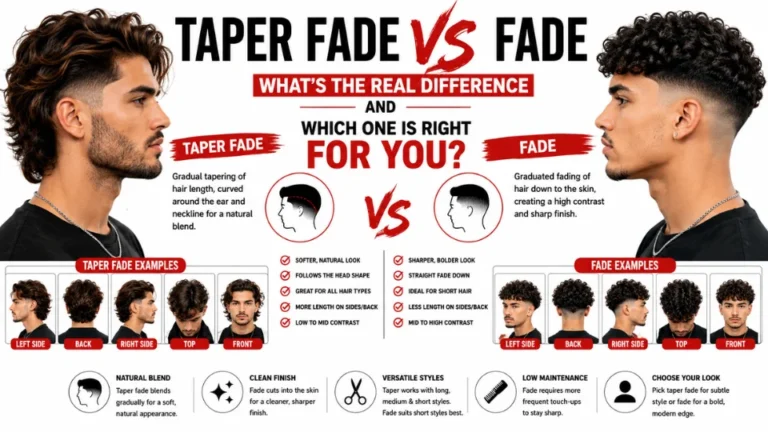
Next Up: Still unsure about the difference between these two popular cuts? Check out our complete breakdown of Taper Fade vs Fade.