
Taper Fade vs Low Fade: The Ultimate Guide to a Perfect Cut

Picking a new haircut can feel scary. You sit in the chair. The barber asks, “Taper or fade?” And your mind goes blank.
Don’t worry. You are not alone. Thousands of people search for taper fade vs low fade every single month because barber shop words are confusing.
This guide will fix that. By the end, you will know exactly what a taper fade is, what a low fade is, and which one fits your face, hair, and style best. You will also learn how these two cuts compare to other popular fades, like the temp fade, drop fade, skin fade, and shadow fade.
Let’s cut through the confusion, one section at a time.
What Is a Taper Fade?

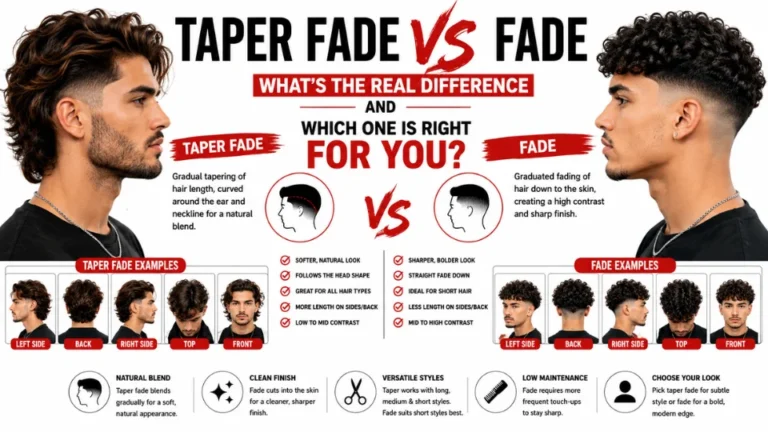
A taper fade is a haircut where the hair gets shorter as it moves down toward the ears and neck. It does not shave all the way down to skin. Instead, it blends smoothly from longer hair on top to short, neat hair near the bottom.
Think of it like a soft slope on a hill. There is no hard, sharp line. Just a gentle, gradual change.
Barbers love the taper fade because it works almost everywhere. It fits short hair, long hair, curly hair, and straight hair. It also fits almost every face shape.
Many workplaces prefer this cut too. It looks neat and professional, but it still has some style and edge.
Styling Tip: Keep your taper fade fresh with a trim every 2–4 weeks. Use matte clay for a natural look or light pomade for a clean, polished finish.
What Is a Low Fade?

A low fade is a bit different. Instead of blending gradually from top to bottom, the fade starts lower on the head, usually just above the ears and around the back of the neck.
The top of the head stays fuller and longer. The sides and back get very short, sometimes down to the skin, near the bottom edge only.
This creates more contrast. The top looks bold and full. The bottom looks clean and tight. But the fading itself only happens in a small area, close to the hairline.
People who want a subtle look often choose a low fade. It is less dramatic than a high fade, but it still gives a sharp, clean finish.
Taper Fade vs Low Fade: What’s the Real Difference?

Now let’s get to the heart of it. What is the actual difference between Taper Fade vs Low Fade? Understanding Taper Fade vs Low Fade helps you choose the haircut that best matches your style and maintenance preferences.
The short answer: when comparing Taper Fade vs Low Fade, it comes down to where the fading happens and how much of the head it covers.
Let’s break it into simple parts.
Fade Height and Placement
A taper fade usually covers more of the head. When comparing Taper Fade vs Low Fade, the taper fade blending can start higher, near the temples, and flow all the way down.
A low fade keeps things closer to the bottom. In the Taper Fade vs Low Fade comparison, the upper sides and back stay thicker for longer, and the fading only appears near the ears and neckline.
Blending Style
Taper fades are known for very soft, slow blending. In the Taper Fade vs Low Fade debate, there is barely any visible line with a taper fade.
Low fades can blend gently too, but they often show more contrast because the top is fuller compared to the very short bottom section. This is one of the biggest visual differences in Taper Fade vs Low Fade.
Face Shape Fit
A taper fade is more forgiving. In Taper Fade vs Low Fade, it works for round faces, square faces, oval faces, and long faces because it does not create sharp contrast.
A low fade can add some balance to a round face by adding a bit of height and structure near the sides, making Taper Fade vs Low Fade an important choice based on your face shape.
Hair Type
Taper fades work great with straight, wavy, and thick hair, since the gradual blend hides any awkward hair growth patterns. This is one reason many people prefer Taper Fade vs Low Fade for versatile styling.
Low fades often look amazing on curly and coily hair, since the fuller top can show off curl texture while the sides stay tidy. Your hair texture plays a major role when deciding Taper Fade vs Low Fade.
Maintenance Needs
Taper fades usually need a trim every three to four weeks to keep the blend looking sharp. When considering Taper Fade vs Low Fade, maintenance is an important factor.
Low fades can sometimes stretch a bit longer between visits, since the fading area is smaller and less noticeable when it grows out. This makes Taper Fade vs Low Fade a practical comparison for anyone looking for a haircut that matches their lifestyle.
Taper Fade vs Low Fade at a Glance: Comparison Table

| Feature | Taper Fade | Low Fade |
| Fade starts | Near temples, moves down | Near ears, close to the bottom |
| Contrast level | Low to medium | Medium to high |
| Best for | Most face shapes, workplaces | Curly hair, subtle bold looks |
| Maintenance | Every 3-4 weeks | Every 4-5 weeks |
| Overall vibe | Soft, professional | Clean, sharp, understated |
If you want something safe and versatile, go with a taper. If you want a little more shape and contrast without going too bold, a low fade might be your answer.
So, in plain words, the difference between taper fade and low fade comes down to placement and contrast, nothing more complicated than that.
A Simple Example
Picture two brothers walking into the same barber shop.
The older brother works at a bank. He asks for a taper fade. His barber blends the sides smoothly from the top, and the cut looks sharp but calm. It fits his office job perfectly.
The younger brother plays basketball on weekends. He asks for a low fade. His barber keeps the top full and adds a tighter, bolder fade near his ears. It matches his active, sporty style.
Same barber. Same day. Two totally different results. That’s the power of understanding these two haircuts.
Why People Mix Them Up
Part of the confusion comes from barber shop menus. Some shops list “taper” and “fade” as separate options. Other shops combine the words into one style name.
Add in regional differences, and you get many local nicknames for cuts that are almost identical. A barber in one city might call a cut a “low taper.” A barber somewhere else might call the same haircut a “soft fade.”
The good news is simple. Once you understand the basic idea, height and blend, you can talk to any barber, anywhere, and get the cut you actually want.
Taper Fade vs Temp Fade: How Are They Different?

Many people also search for taper fade vs temp fade, and it’s easy to see why. The names sound similar, but they are not the same haircut.
A temp fade, short for “temple fade,” focuses only on the area around the temples and hairline. It is a small, precise fade that frames the front of the face.
A taper fade, on the other hand, covers a much bigger area. It blends the entire side and back of the head, not just the temple region.
You can actually combine both. Many barbers add a temp fade detail on top of a taper fade for extra sharpness around the front hairline.
So if someone asks about temple fade vs taper fade, remember this: a temple fade is a small detail, while a taper fade is the whole haircut structure.
Think about a picture frame again. The temple fade is like the corner trim of the frame. The taper fade is the entire frame around the picture.
A lot of people request a temp fade when they are growing their hair out. It lets them keep length everywhere else while still looking neat around the front hairline. This makes it a popular choice for anyone in a “grow-out” phase between shorter cuts.
Styling Tip: Pair a temp fade with a taper fade for a sharper hairline and a cleaner overall look. Use a small amount of styling product to keep the front neat and well-defined throughout the day.
Taper Fade vs Drop Fade: What Sets Them Apart?

Next up is the taper fade vs drop fade comparison. This one confuses a lot of people, especially those who found photos online without labels. Like Taper Fade vs Low Fade, understanding the differences helps you choose the right haircut for your style.
A drop fade curves downward behind the ear, dropping lower toward the back of the neck. It follows the natural curve of the head, creating a rounded, swooping line instead of a straight one. This is very different from Taper Fade vs Low Fade, where the focus is on fade placement rather than the shape of the fade line.
A taper fade, again, is about gradual blending from top to bottom. It does not need to curve or drop; it can stay in a fairly straight line down the side of the head. This smooth blend is one reason many people compare Taper Fade vs Low Fade before choosing a haircut.
Here’s an easy way to remember the drop fade vs taper fade difference: a drop fade is about the shape of the fade line, while a taper fade is about the smoothness of the blend. This concept also helps when understanding Taper Fade vs Low Fade.
In fact, you can get a “tapered drop fade,” which combines both styles. The fade drops behind the ear, but it still blends softly like a taper. If you’re exploring Taper Fade vs Low Fade, it’s worth knowing that fades can also be combined with other techniques.
Drop fades became popular because they look great with beards. The curved line behind the ear connects smoothly into a beard fade, creating one continuous, clean shape from the sideburns down to the jawline. This feature makes it different from both Taper Fade vs Low Fade styles.
A taper fade, without the drop, keeps a more traditional straight line. It still looks sharp, but it does not follow the same curved path around the ear and neck. This classic appearance is one reason many people prefer it in the Taper Fade vs Low Fade comparison.
If you have a beard and want everything to blend together perfectly, ask your barber about a drop fade. If you prefer a more classic, straight-line look, stick with a standard taper. Understanding Taper Fade vs Low Fade and taper fade vs drop fade will help you explain exactly what you want during your next haircut.
Mid Taper vs Mid Taper Fade: Clearing Up the Confusion

This next comparison trips up even seasoned haircut fans: mid taper vs mid taper fade.
Here’s the truth. These two terms are almost the same thing, just described in slightly different ways by different barbers.
A “mid taper” usually means the tapering starts at a medium height on the head, not too high and not too low.
A “mid taper fade” is basically the same idea, just with the word “fade” added to make clear that the hair blends down smoothly, rather than staying the same length.
So if your barber uses either term, you’ll likely end up with a similar cut: medium-height blending that tapers down neatly on the sides.
The key takeaway? Don’t stress over small wording differences. Bring a photo to your barber. A picture removes all confusion.
A mid taper fade tends to be a great middle ground for people who feel unsure about extremes. It is not too high, so it won’t look overly bold. It is not too low, so it won’t look too plain. This makes it one of the most requested cuts for first-time fade customers.
If you’re nervous about trying a fade for the first time, a mid taper fade is a safe and stylish place to start.
Styling Tip: A mid taper fade is one of the easiest fades to wear because it suits most face shapes and hair types. Show your barber a reference photo to ensure you get the exact blend and height you want.
Temple Fade vs Taper Fade: A Closer Look
We touched on this earlier, but it deserves its own section since so many people ask about temple fade vs taper fade specifically.
A temple fade is a detail move. It sharpens the hairline right where your forehead meets your hair, near the temples.
A taper fade is a full haircut style. It shapes the whole side and back of your head.
Think of the temple fade as a finishing touch, like adding a fresh line around a picture frame. The taper fade is the whole frame itself.
Most modern haircuts actually use both together for the cleanest look.
Bald Fade vs Taper Fade: Which One Goes Shorter?

Let’s talk about bald fade vs taper fade, sometimes phrased as taper fade vs bald fade.
A bald fade, sometimes called a skin fade, cuts the hair all the way down to the skin at the bottom. There is no length left near the ears or neckline. It looks extremely clean and bold.
A taper fade does not go all the way to the skin. It leaves a small amount of hair, even at the shortest point, creating a softer finish.
If you want a daring, super sharp look, a bald fade delivers that. If you want something a bit more relaxed and easy to grow out, a taper fade is the safer pick.
Many people combine the two ideas into a “taper fade with a bald finish,” where most of the cut tapers gently, but the very bottom edge goes down to skin for extra sharpness.
Athletes and performers often choose bald fades because they photograph well and require very little daily styling. Simply wash, and you’re ready to go.
Office workers and students sometimes lean toward the taper fade instead. It offers a neat look without feeling too extreme for school dress codes or workplace policies.
Both styles need regular trims to stay sharp, but a bald fade tends to show new growth faster since the skin-level cutting makes even small regrowth noticeable within just a week or two.
Skin Fade vs Taper Fade: Is There a Real Difference?

This question, skin fade vs taper fade, is very close to the bald fade comparison above, since “skin fade” and “bald fade” mean almost the same thing.
A skin fade shaves hair down to the skin level at the bottom of the cut. It creates a very high contrast look between the top and sides.
A taper fade keeps a bit of length everywhere, even at the shortest section. This makes the overall look softer and less extreme.
If your job requires a more formal appearance, a taper fade often looks more professional. If you want maximum boldness and a modern streetwear vibe, a skin fade delivers that instantly.
Skin fades also tend to work beautifully with designs. Some people add a shaved line, a pattern, or even initials into the short section near the skin. A taper fade rarely shows these designs clearly, since there is still some hair length left, even in the shortest area.
So if you love the idea of adding a design to your cut, a skin fade gives your barber a cleaner canvas to work with.
Styling Tip: Choose a taper fade for a clean, professional style or a skin fade for a bold, high-contrast look. Keep either cut fresh with regular trims every 2–3 weeks.
Taper Fade vs Mid Fade: Understanding the Levels

Now here’s another popular one: taper fade vs mid fade.
A mid fade starts blending at the middle of the head, roughly above the ears. It sits between a high fade (which starts near the top) and a low fade (which starts near the bottom).
A taper fade is not really about height at all. It is about the style of blending — smooth and gradual, without a hard line.
This means you can actually have a “mid taper fade,” combining both ideas: the fade starts in the middle of the head, and it blends softly like a taper.
So when people ask about taper fade vs mid fade, the real answer is: they are not opposites. A taper is a blending technique. A mid fade is a starting height. They can work together perfectly.
Many barbers actually recommend a mid taper fade for people trying a fade haircut for the very first time. It balances contrast and safety, giving you a taste of the fade look without going too dramatic right away.
Once you get comfortable, you can always ask your barber to go higher or lower on your next visit.
Old-School Fade Names You Might Still Hear
Some older barber shops still use vintage terms for their haircuts, and this often causes mix-ups. The term classic fade vs taper fade often pops up when someone wants a timeless, traditional look.
A classic fade usually refers to a simple, all-purpose short haircut with even fading around the entire head. It doesn’t follow current trends; it’s been around for decades.
A taper fade is more specific. It focuses on that soft, gradual blend from longer hair on top to shorter hair below.
In many barber shops today, “classic fade” and “taper fade” actually describe very similar cuts. The biggest difference is often just the name used in that particular shop or region.
If you’re not sure, describe what you want: short sides, longer top, and a smooth blend with no harsh lines. That description usually gets you either style, no matter what it’s called.
Older generations often use the word “classic” simply to mean “not trendy.” Younger clients often use “taper fade” because that’s the term used on social media and in barber tutorials.
Either way, the haircut underneath the name is usually the same trusted style that has worked for decades.
Soft Blend Fades: The Shadow Style Explained
Let’s dig into another gentle option that often gets compared in the same breath: shadow fade vs taper fade, also written as taper fade vs shadow fade.
A shadow fade is a very soft, subtle fade. Clippers are used with a specific guard setting to leave a light dusting of hair, almost like a shadow, instead of shaving down to bare skin.
A taper fade can be soft too, but it usually still shows a clear length change from top to bottom.
Here’s the easiest way to picture it: a shadow fade is about softness and subtlety, almost blurry in appearance. A taper fade is about gradual length change, which can be soft or slightly more defined depending on your barber’s technique.
Some people ask about a low shadow taper fade. This combines three ideas: the fade sits low on the head, it uses the soft “shadow” clipper technique, and it blends gradually like a taper. It is a subtle, low-key style that still looks sharp up close.
Shadow fades are a great pick for people who want a fade but worry it might look too bold at work or school. Since the clippers leave a light dusting of hair instead of bare skin, the overall look stays soft and understated.
A regular taper fade can also look subtle, but a shadow fade takes subtlety to the next level. If you want people to notice your haircut without it screaming for attention, a shadow fade is worth asking for.
What Does a “Regular Fade” Really Mean?

Another common search worth clearing up is regular fade vs taper fade, especially for people also comparing Taper Fade vs Low Fade. Many people use these terms interchangeably, even though they refer to different haircut styles.
A “regular fade” is not one specific style. It’s a general term some people use for any standard fade haircut without extra details or trends added. This is why comparisons like Taper Fade vs Low Fade and regular fade vs taper fade often create confusion.
A taper fade is a specific technique: smooth, gradual blending from top to bottom. In discussions about Taper Fade vs Low Fade, the taper fade is known for its softer, more natural transition.
In most cases, when someone says “regular fade,” they actually mean a taper fade without realizing it. The term “regular” just means simple and classic, not flashy or extreme. Understanding this makes Taper Fade vs Low Fade much easier to compare.
If your barber asks what you mean by “regular,” just say you want short sides that blend smoothly into longer hair on top. That clears up any confusion right away and helps explain your preference in Taper Fade vs Low Fade.
Some older barbers still use “regular fade” as a catch-all term from decades past, before newer names like “skin fade” or “shadow fade” became popular. Younger barbers, especially those trained more recently, tend to use more specific terms when discussing Taper Fade vs Low Fade or other fade styles.
Neither way is wrong. It just shows how haircut language has changed over time, while the actual techniques have stayed fairly similar. Whether you’re comparing Taper Fade vs Low Fade or asking for a regular fade, clear communication with your barber is the best way to get the haircut you want.
Taper Fade Low Fade: The Short Version

Since so many people also type in short searches like low vs taper fade or taper fade or low fade, here is the short, simple summary of taper fade low fade differences:
- A low fade keeps most of the head fuller and only fades near the bottom.
- A taper fade blends gradually across a bigger area, from the temples down.
- Low fades create more contrast between top and bottom.
- Taper fades create a smoother, more even look overall.
- Low fades often suit curly or coily hair beautifully.
- Taper fades suit almost every hair type and face shape.
If you’re stuck choosing between the two, think about how bold you want to look. Low fade equals more contrast and boldness. Taper fade equals smooth, safe, and professional.
Here’s one more tip. If you are ever unsure which one to pick, ask your barber to show you both styles on their phone or in a lookbook. Seeing real photos on real people often makes the decision much easier than reading descriptions alone.
How to Choose Between Taper Fade and Low Fade
Choosing the right cut depends on a few personal factors. Let’s walk through them.
Think About Your Face Shape
Round faces often look great with a low fade, since it adds height and structure.
Oval, square, and long faces usually look good with either style, since a taper fade doesn’t add much contrast to interfere with face shape.
Think About Your Hair Type
Curly and coily hair often shines with a low fade, since the fuller top keeps curls visible while the sides stay tidy.
Straight and wavy hair usually looks fantastic with a taper fade, since the smooth blend flatters the natural fall of the hair.
Think About Your Lifestyle
If you work in an office or a formal setting, a taper fade often feels safer and more polished.
If you want something bold for social settings, sports, or creative work, a low fade might give you that extra edge.
Think About Upkeep Time
If you don’t want frequent trims, a low fade can sometimes stretch a little longer between visits.
If you don’t mind visiting the barber every few weeks, a taper fade keeps its clean shape with regular maintenance.
Think About Your Age and Setting
Younger clients, students, and people in creative jobs often lean toward bolder cuts like low fades or skin fades.
Older clients, professionals, and people in traditional workplaces often lean toward taper fades, since the softer blend feels timeless and safe in almost any setting.
Of course, these are not strict rules. Plenty of professionals rock a low fade, and plenty of younger clients prefer the classic taper look. Choose what makes you feel confident, not just what fits a trend.
Taper Fade or Low Fade Tutorial: How to Ask Your Barber Step by Step
Step 1: Pick Your Base Style
Decide first if you want a taper fade or a low fade. Use everything you learned above about Taper Fade vs Low Fade. Think about your face shape, hair type, and how bold you want the contrast to look before making your choice.
Step 2: Choose Your Guard Number
Barbers use clipper guards numbered from 0 to 8. Lower numbers cut hair shorter. For a taper fade, ask for a gradual blend using guards 2 through 4 on the sides. For a low fade, ask for a guard 1 or skin-level finish only near the bottom edge. Knowing the differences in Taper Fade vs Low Fade helps you explain exactly what you want.
Step 3: Decide on Top Length
Tell your barber how much length you want on top. A scissor cut, a comb-over style, or a short crop all pair well with either a taper fade or a low fade, making Taper Fade vs Low Fade a matter of personal style rather than top length.
Step 4: Add Extra Details
If you want a sharper hairline, ask for a temple fade detail. If you want a curved line behind the ear, ask for a drop fade shape. These small add-ons personalize your cut even further, whether you choose Taper Fade vs Low Fade.
Step 5: Bring a Reference Photo
Even with the right words, pictures remove all doubt. Save two or three photos on your phone before your appointment. Show them to your barber and point out exactly what you like from each one, especially if you’re deciding between Taper Fade vs Low Fade.
Step 6: Communicate During the Cut
Speak up partway through the haircut if something feels off. A quick comment early on is much easier to fix than a finished cut you don’t love. Good communication is the easiest way to get the Taper Fade vs Low Fade style you have in mind.
Step 7: Set a Follow-Up Schedule
Ask your barber how many weeks until your next trim. Book that appointment before you even leave the shop. This keeps your fade looking fresh all year round, whether you wear a taper fade or a low fade.
Follow these seven steps, and you’ll walk out of the chair with a haircut that matches exactly what you pictured in your head. By understanding Taper Fade vs Low Fade, you’ll feel more confident discussing your style with your barber and choosing the haircut that suits you best.
Maintenance Tips for Both Styles
Whichever style you pick, a little home care goes a long way.
Wash regularly. Use a gentle shampoo two to three times a week to keep your scalp and hair clean and healthy.
Moisturize your scalp. A light oil or scalp lotion prevents dryness and flaking, especially on shorter sections.
Book trims on time. Both taper fades and low fades grow out and lose their sharp shape after three to five weeks. Don’t wait too long.
Use the right tools. A soft brush or comb helps train hair growth direction, especially on top sections.
Communicate with your barber. Bring photos and describe exactly what look you want. This avoids miscommunication at your next appointment.
Which One Should You Get? The Final Decision
There is no wrong choice here. Whether you keep asking yourself taper fade or low fade, both styles are popular, timeless, and easy to maintain.
Choose a taper fade if you want something soft, professional, and flexible for almost any hair type or face shape.
Choose a low fade if you want more contrast, a bolder statement, and a style that highlights curls or thicker hair on top.
You really cannot go wrong. Both cuts have stayed popular for years because they simply work.
Frequently Asked Questions
Is a taper fade the same as a low fade?
No. A taper fade blends gradually across a larger area. A low fade only fades near the bottom of the head, keeping more length on top and sides.
Which fade grows out better, taper or low?
Low fades often grow out a bit more gracefully since less of the head is affected by short cutting.
Can I combine a taper fade and a low fade?
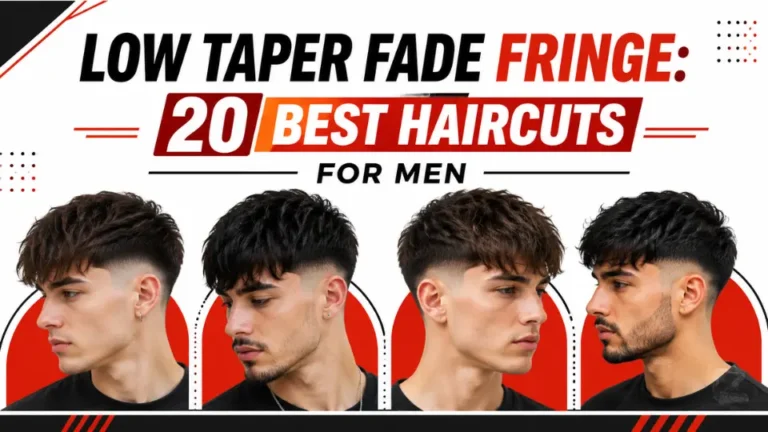
Yes. Many barbers create a “low taper fade,” which blends softly like a taper but starts lower on the head, giving you the best of both worlds.
Does a taper fade work for curly hair?
Yes, though a low fade is often praised more for showing off natural curl patterns on top.
How often should I get my fade trimmed?
Most people need a trim every three to five weeks to keep their fade sharp and clean.
What should I tell my barber if I don’t know the exact term?
Describe the look: how short you want the sides, how long you want the top, and how smooth or bold you want the blend to look. Photos help even more.
Final Thoughts
At the end of the day, the choice in Taper Fade vs Low Fade comes down to your personal style, hair type, and how bold you want your haircut to look. Understanding the differences in Taper Fade vs Low Fade makes it much easier to choose the right cut for your face shape, lifestyle, and grooming routine.
Both cuts are trusted classics. Whether you prefer Taper Fade vs Low Fade, barbers around the world use these styles every single day because they suit almost every hair type and face shape while offering a clean, modern appearance.
Take your time, bring a reference photo if you have one, and talk openly with your barber about Taper Fade vs Low Fade. A professional can recommend which style will work best for your hair and preferences. That’s the real secret to walking out of the chair with a haircut you’ll love.
Next Up: Looking for a more striking, high-contrast style? Read our complete breakdown of the High Taper Fade.


> Thank you for your comment! You’re absolutely right. A skin fade can be combined with a high, mid, or low fade depending on the look you want. We appreciate your feedback and hope you enjoy exploring more haircut guides on our website.